
The Clear Convenience with a Cloudy Truth
[su_box title=”TL;DR” style=”soft” box_color=”#f5f5f5″ title_color=”#000000″ radius=”5″]
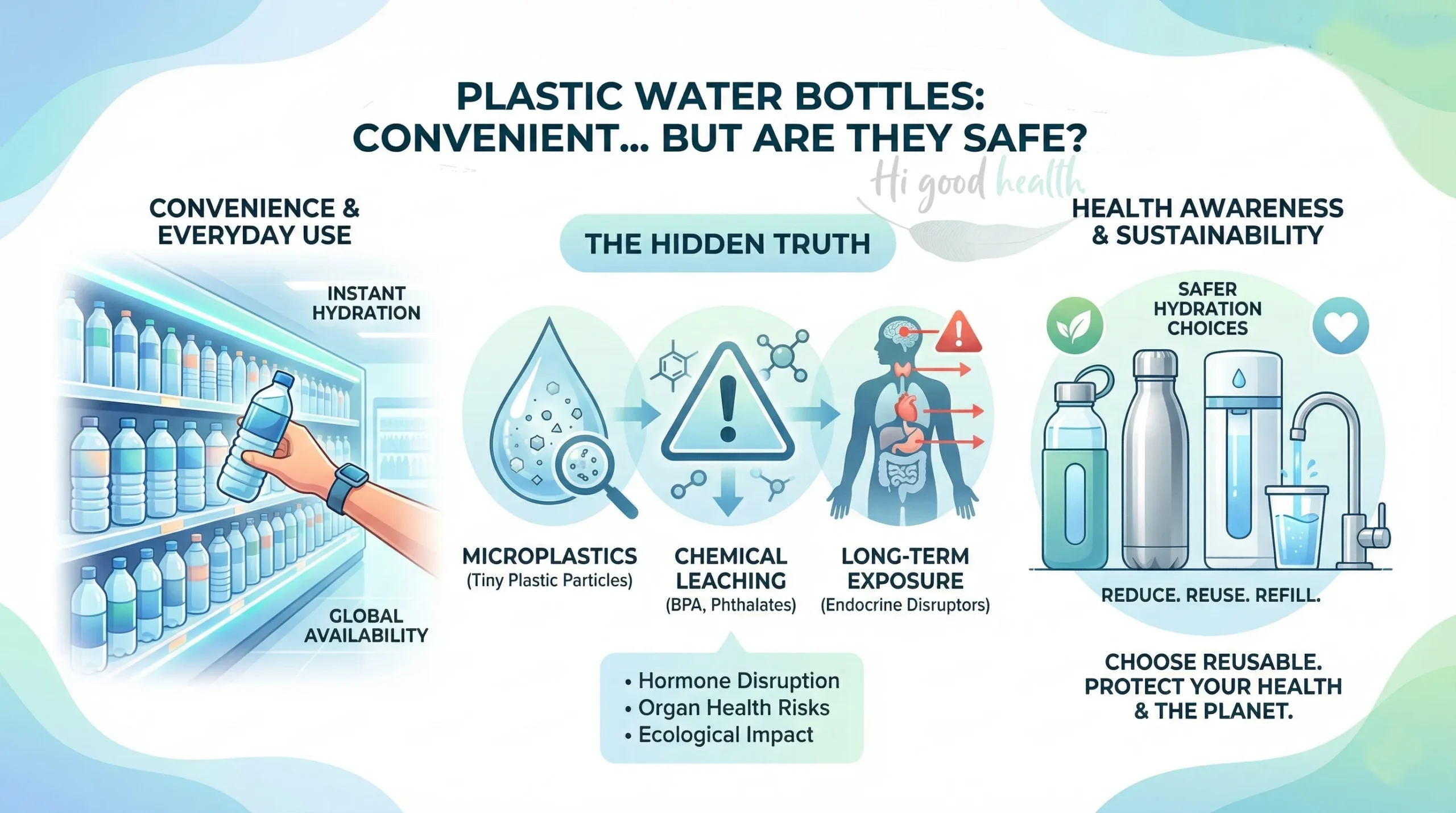
• Walk into any supermarket, airport, gym, or gas station, and you will likely see shelves lined with plastic water bottles. They offer a convenient, portable, and widely available way to stay hydrated, which is one reason bottled water consumption has increased globally.
• For many consumers, bottled water represents a quick and reliable source of drinking water. However, increasing scientific interest has prompted questions about the potential health and environmental implications associated with plastic packaging. Under certain conditions — such as prolonged storage, exposure to heat, or repeated reuse — some plastic materials may release small amounts of chemical compounds into the water they contain. The question of their safety is gaining serious traction, with wellness experts and biohackers like Bryan Johnson making a point to avoid them entirely, citing concerns over plastics leaching chemicals into the very water we drink to stay healthy.
[/su_box]
Table of Contents
Researchers have focused on substances such as bisphenols, phthalates, and microplastics, which may migrate from plastic packaging into beverages. Although the concentrations detected in bottled water are generally considered low, ongoing studies are examining whether long-term exposure to these substances could have implications for metabolic, hormonal, or environmental health.
This guide examines the current scientific understanding of plastic water bottles, discusses potential concerns related to chemical migration and microplastics, and offers practical strategies to help you make safer and more informed hydration choices.
A Brief History: How Plastic Became King
It was not always this way. Until the late 20th century, the idea of paying for bottled water was uncommon in many countries. People drank from the tap, used glass bottles for milk and soda, and carried water in canteens or thermoses.
The bottled water industry began expanding in the 1970s and grew rapidly during the 1990s and early 2000s, particularly in countries where consumers increasingly sought convenient and portable hydration options.
Driven by brilliant marketing campaigns that sold images of pristine mountain springs and superior purity, bottled water became a status symbol and a health-conscious choice. The low cost, durability, and light weight of Polyethylene Terephthalate (PET) plastic made it the perfect vessel for this new industry.
Today, single-use plastic bottles have become a dominant form of beverage packaging worldwide. However, increasing attention to environmental sustainability and potential health considerations related to plastic exposure has renewed interest in alternative options such as reusable glass or stainless-steel containers.
Decoding the Plastic: Understanding Resin Identification Codes
When people refer to “plastic bottles,” they are not referring to a single material. Beverage containers are made from several different types of plastic polymers. These materials can be identified using the Resin Identification Code (RIC) — the number displayed inside the triangular “chasing arrows” recycling symbol on plastic products.
#1 PET or PETE (Polyethylene Terephthalate)
This is the clear plastic used for most single-use water, soda, and juice bottles. It is considered generally safe for single use by regulatory agencies including the FDA and EFSA. However, scientific studies show that when exposed to heat (like in a hot car), sunlight, or physical stress, and with repeated use, PET bottles can leach antimony, a toxic heavy metal used as a catalyst in PET production.[1]
The Science of Antimony Leaching: Research published in multiple peer-reviewed journals demonstrates that antimony concentrations in bottled water remain well below the US Environmental Protection Agency (EPA) maximum contaminant level (MCL) of 6 ppb under normal storage conditions.
Research indicates that elevated temperatures can increase migration rates. Experimental studies have demonstrated that when PET bottles are stored at temperatures above approximately 50°C (122°F) for prolonged periods, antimony concentrations in the contained water may increase. Studies show that after 12 weeks at 60°C, antimony levels can reach 9.84 μg/L — exceeding safety thresholds in some jurisdictions.[2] Summer temperatures inside cars can exceed 65°C in hot climates, creating conditions that dramatically increase leaching rates. This is particularly concerning because the International Agency for Research on Cancer (IARC) recently upgraded trivalent antimony to a Group 2A ‘Probable’ Human Carcinogen. Beyond potential cancer risks, modern mechanistic studies have shown that antimony can cause direct DNA damage (genotoxicity) and oxidative stress in human cells, even at lower concentrations over prolonged periods.[11]
Important Note: PET (#1) bottles do not typically contain phthalates as plasticizers. The primary chemical concern with PET is antimony leaching, particularly under heat exposure. Phthalates are more commonly associated with other plastics like PVC (#3) and some flexible plastics.
#7 Polycarbonate Plastics
Plastics labeled #7 (“Other”) represent a broad category of polymers. Historically, many rigid reusable water containers — such as older office water cooler jugs and some sports bottles — were made from polycarbonate, a plastic that can contain bisphenol A (BPA).
Due to concerns about BPA’s potential endocrine-disrupting effects, many manufacturers have transitioned to BPA-free formulations for reusable bottles and containers. When selecting reusable plastic drinkware, it is generally advisable to choose products that are clearly labeled as BPA-free or made from alternative materials designed for repeated food-contact use.
Microplastics and Nanoplastics: The Invisible Concern
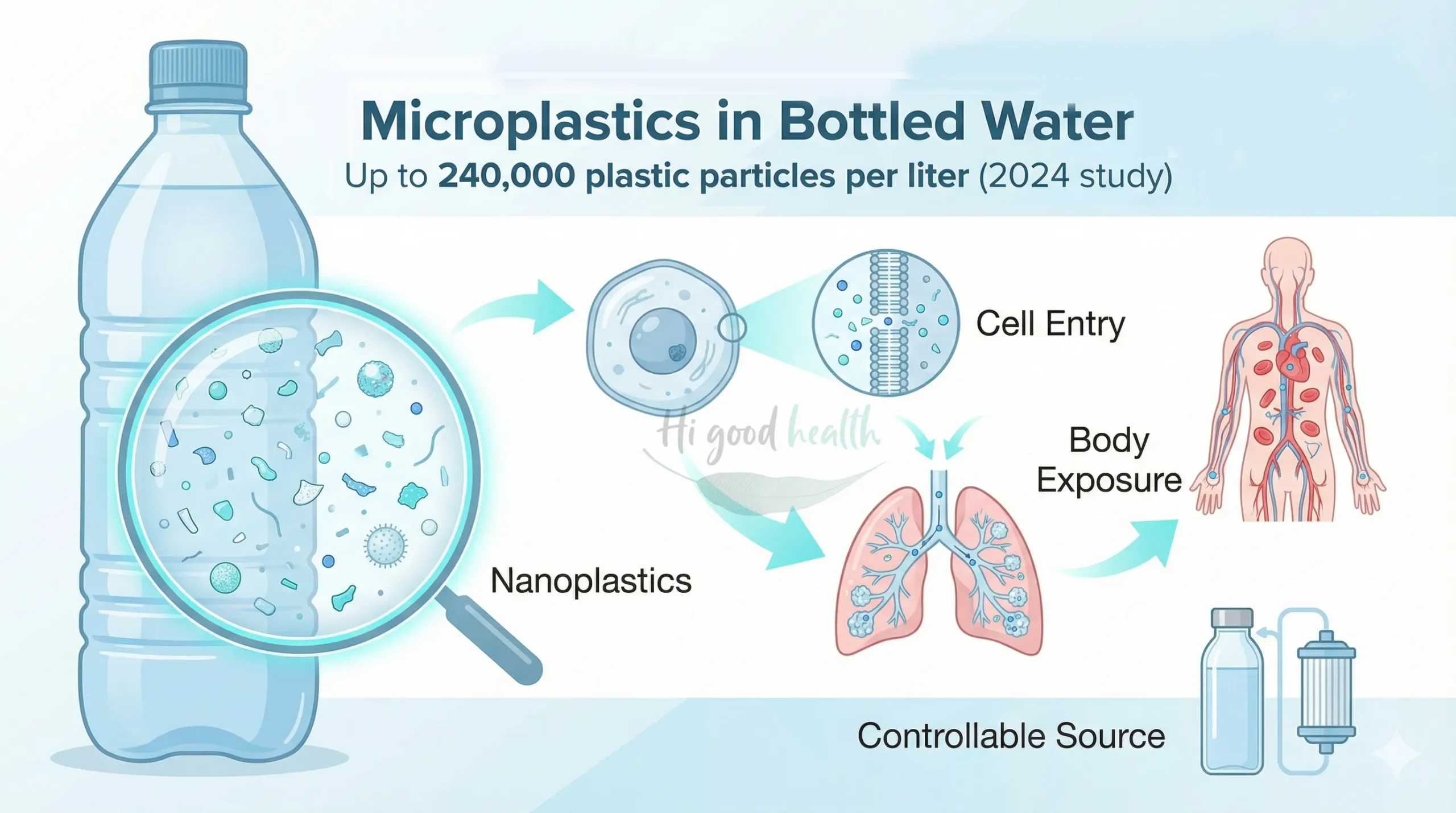
A growing area of scientific interest related to PET bottles is the presence of microplastics (typically defined as plastic particles <5 mm) and nanoplastics (particles in the nanometer range).
A widely cited 2024 study from Columbia University published in the Proceedings of the National Academy of Sciences found that a typical liter of bottled water contains an average of 240,000 detectable plastic fragments, with nanoplastics comprising the vast majority.[3]
Due to their extremely small size, nanoplastics have the theoretical potential to interact with biological systems at the cellular level. Experimental research suggests that nanoparticles, including nanoplastics, may cross certain biological barriers under laboratory conditions. However, the extent to which ingested nanoplastics are absorbed, distributed, or cause harm in humans remains an area of ongoing investigation.
A preclinical study in the New England Journal of Medicine found that patients with microplastics in their heart plaques had a 4.5 times higher risk of heart attack or stroke.[12]
Critical Context: It’s important to note that microplastics are now ubiquitous in our environment. We also consume them through the air we breathe, seafood, salt, and various foods. The World Health Organization (WHO) acknowledges their presence but states in its 2019 report that microplastics in drinking water don’t appear to pose a health risk at current levels.[4] However, WHO emphasizes that this assessment has low confidence due to insufficient data and calls for more research while recommending a precautionary approach.
Why This Matters: While microplastics are everywhere, bottled water represents a significant and, more importantly, a controllable source of exposure. By switching to reusable bottles, you can dramatically reduce your daily intake from this specific pathway.
The Hidden Health Impacts of Plastic Bottles: What the Science Says
One of the primary health concerns with plastic bottles is chemical migration (leaching) — the process where chemicals from the plastic migrate into the water. The main compounds that have been studied extensively are:
Bisphenol A (BPA): The Notorious Endocrine Disruptor
BPA was historically used in the production of polycarbonate (#7 plastic) water cooler jugs and reusable sports bottles. BPA is classified as an endocrine active compound, meaning it can mimic the body’s hormones and potentially interfere with reproductive health, brain development, metabolism, and thyroid function.[5] Due to regulatory scrutiny and consumer concerns, many manufacturers have reduced or eliminated BPA use in food-contact materials.
Authoritative Research: Research led by Dr. Leonardo Trasande, a leading researcher in environmental health at NYU Grossman School of Medicine and author of Sicker, Fatter, Poorer, has extensively documented the risks of endocrine-disrupting chemicals.[6] His research emphasizes that even low-level exposure during critical developmental windows can have lasting health consequences, particularly for pregnant women, infants, and children.
To better understand how hormone-disrupting chemicals can find their way into your family’s diet, explore our in-depth guide: Silent Invaders — How Hormones & Antibiotics Sneak into Your Food and How to Fight Back.
BPA-Free Alternatives: Not a Perfect Solution
Many products now proudly display “BPA-Free” labels, but emerging research reveals a concerning pattern: BPA substitutes like Bisphenol S (BPS) and Bisphenol F (BPF) have been shown to have similar endocrine-disrupting effects. A systematic review published in the National Institutes of Health database found that BPS and BPF exhibit estrogenic activity in the same order of magnitude as BPA, with BPF potentially being equally or more potent.[7] This means “BPA-Free” does not necessarily mean safer — it often means “different chemical, similar concerns.”
Antimony: The Heavy Metal in PET
As detailed above, antimony is used as a catalyst in PET production and can leach into water, especially under heat exposure. While acute toxicity is rare at typical exposure levels, chronic low-dose exposure raises concerns about respiratory irritation, cardiovascular effects, and potential metabolic disruption.
Current Scientific Consensus: Regulatory agencies such as the WHO, FDA, and EFSA have established safety limits for these chemicals in drinking water. Current research suggests that under normal storage conditions (room temperature, limited sun exposure, single use), PET bottles remain within safe limits. However, the precautionary principle suggests minimizing exposure where easily achievable, particularly for vulnerable populations.
Your kidneys play a critical role in filtering waste products and maintaining fluid and electrolyte balance. Learn more about protecting your kidney health in our detailed guide: Your Kidney Guardians.
Safer Water Bottle Alternatives: Identifying the Best Materials
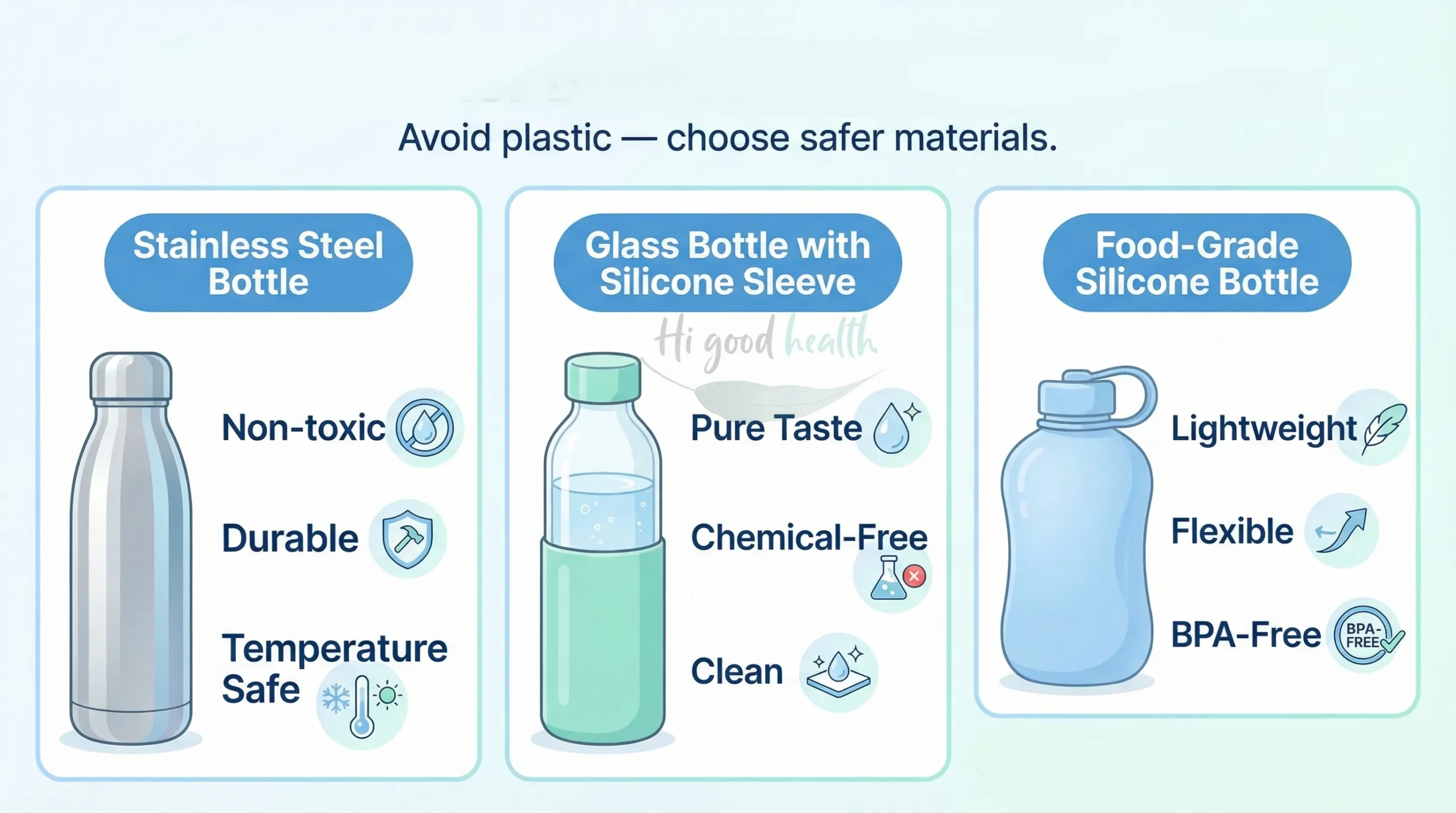
Reducing reliance on single-use plastics and transitioning to reusable containers made from stable, food-safe materials is a practical way to minimize unnecessary chemical exposure. While approved plastics are considered safe under normal use, choosing alternative materials can further reduce potential risks, particularly with repeated use or heat exposure.
How to Identify “BPA-Free” Products
Look for a clear label on the product or packaging that explicitly states “BPA-Free.” While most single-use bottles (Type #1 and #2) don’t contain BPA, this label is crucial for reusable plastic bottles. As a rule, avoid plastic designated with #7 (Polycarbonate) unless it is certified BPA-free. However, remember that BPA-free doesn’t guarantee freedom from all endocrine disruptors.
Best Material Options for Reusable Bottles
- 18/8 or 304 Grade Stainless Steel (Top Recommendation)
Pros: Durable, non-reactive, and resistant to corrosion. Does not leach chemicals under normal use. Suitable for both hot and cold beverages. Widely used in food-grade applications. Can be reused many times, hence its initial cost is quickly offset by a lifetime of durability.
Technical note: “18/8” refers to approximately 18% chromium and 8% nickel, which provides corrosion resistance and structural stability. This composition corresponds to 304 stainless steel, the most common food-grade alloy.
Cons: Heavier than plastic. Typically more expensive.
Note: 18/8 and 304 are essentially the same for food-grade applications. - Glass (Purest Option)
Pros: Chemically inert and non-porous. Does not interact with beverages or alter taste. No risk of chemical migration under normal conditions.
Cons: Fragile and heavier than other materials. May require protective sleeves for durability. - Food-Grade Silicone
Pros: Lightweight, flexible, and often collapsible. Generally considered safe when made from high-quality, food-grade silicone. Suitable for travel and portability.
Cons: May retain odors or flavors over time. Product quality can vary significantly. - Aluminum (With BPA-Free Liner)
Pros: Lightweight, durable, and highly recyclable.
Cons: Older or lower-quality products may use epoxy-based liners containing BPA. Safety depends on liner integrity. - Bio-PE (Bio-polyethylene) — A bioplastic made by fermenting sugarcane juice.
Pros: 100% Recyclable, BPA and phthalate free, inert and durable.
Cons: Cannot withstand extreme heat and UV rays.
Navigating the Real World: Hydration on the Go
While carrying water from home is ideal, it may not always be practical — especially during travel or long days outside. In such situations, it helps to think in terms of safer choices and risk reduction, rather than perfection.
- Prioritize refilling when possible: Refill your own safe, reusable bottle using water fountains, cafés, restaurants, or airport refill stations.
- If You Must Buy, consider glass: Water in a glass bottle is the best choice — zero leaching risk and purest taste.
- The Next Best: Aluminum: Opaque, protects water from light and heat, and has an excellent recycling rate.
- When Plastic is the only option: Choose bottles from a cool, dark shelf. Check the production date if visible. Drink it promptly, recycle it, and do NOT refill or leave in a hot car.
Hydration is about much more than just the number of glasses you drink each day. Explore our detailed breakdown: Still Thirsty Even After Drinking Water? Unmasking the Real Reasons.
The Ultimate Do’s and Don’ts
| DO ✅ | DON’T ❌ |
|---|---|
| ✅ Invest in a high-quality stainless steel (304/18-8), glass, or food-grade silicone bottle for daily use. | ❌ Don’t reuse single-use PET (#1) bottles — they degrade with washing and refilling. |
| ✅ Filter your tap water at home for a clean, affordable, and sustainable source. | ❌ Don’t leave plastic water bottles in a hot car or in direct sunlight — heat accelerates chemical leaching. |
| ✅ Wash your reusable bottle daily with warm soapy water and allow it to air dry completely. | ❌ Don’t drink from bottles with deep scratches or cloudiness — damage increases bacterial growth and leaching. |
| ✅ When buying water, prioritize glass or aluminum over plastic whenever possible. | ❌ Don’t assume “BPA-Free” means completely safe — look for non-plastic alternatives instead. |
| ✅ Store plastic bottles in cool, dark places and use within recommended timeframes. | ❌ Don’t microwave plastic containers or wash in dishwashers unless explicitly labeled safe for these uses. |
Conclusion: A Balanced Approach to a Modern Problem
In today’s world, completely avoiding plastic is an immense challenge, and the goal is not to live in fear, but to live with awareness and make informed choices. While the definitive long-term harm of chronic, low-dose exposure to chemicals and microplastics from plastic bottles is still being studied, the preliminary evidence is substantial enough to warrant a “better safe than sorry” approach, particularly for vulnerable populations including pregnant women, infants, and children.
The Key Takeaway: Occasional use of plastic bottles is unlikely to pose a meaningful health risk. The greater concern lies in repeated, long-term exposure patterns — regular reuse of single-use bottles, exposure to heat, and consistent reliance on single-use plastics despite available alternatives.
Switching to reusable stainless steel or glass bottles for daily hydration is a simple and effective way to reduce a modifiable source of exposure. This choice also helps address the environmental crisis of plastic pollution that clogs our oceans, harms wildlife, and persists in ecosystems for centuries.
The complex supply chain that brings milk from the farm to our refrigerator can often hide details about animal hormones and byproducts. Read more: Is Your Milk Really Safe? Hidden Animal Byproducts in Cattle Feed + Health Risks You Need to Know.
Practical Action Steps
- Purchase one high-quality reusable bottle this week
- Install a water filter at home if you haven’t already
- Keep your reusable bottle in your car, bag, or at your desk
- When traveling, research water refill locations in advance
- Share this information with family and friends to amplify impact
Frequently Asked Questions
1. Is it safe to reuse disposable plastic water bottles?
It is best to avoid reusing single-use PET (#1) bottles. These bottles are designed for one-time use. Physical stress from squeezing, repeated washing, and wear can break down the plastic, creating microscopic cracks that harbor bacteria and increase the surface area for chemical leaching into your water. If you must reuse temporarily, do so only once or twice, wash gently by hand with mild soap, and replace promptly with a proper reusable bottle.
2. What happens if I leave a plastic water bottle in a hot car?
You should not drink water from bottles exposed to high heat. Research clearly demonstrates that heat significantly accelerates the leaching of chemicals like antimony from PET plastic into water. Studies show that temperatures above 50°C (122°F) can cause antimony levels to increase several-fold within days. If a bottle has been sitting in a hot car or direct sunlight for extended periods, it is safer to discard it.
3. What is the safest type of water bottle to drink from?
The safest materials are: (1) Food-grade stainless steel (18/8 or 304 grade) — non-reactive, durable, proven safe for decades. (2) Glass — chemically inert, zero leaching risk, purest taste. Both are recommended by health and environmental organizations.
4. Is BPA-free plastic completely safe?
Not necessarily. Many BPA-free plastics use substitutes like BPS (Bisphenol S) or BPF (Bisphenol F), which emerging research shows have similar endocrine-disrupting effects to BPA. The safest choice is materials like glass or stainless steel that don’t require these chemical additives at all.
5. Which plastic numbers are safe for drinking water?
For single-use bottles, #1 (PET) is the industry standard and considered safe for single use under normal storage conditions — but should not be reused or exposed to heat. Avoid #7 (Polycarbonate) unless certified BPA-free. For regular use, choose non-plastic alternatives (stainless steel or glass) and always check the Resin Identification Code.
6. Are microplastics in bottled water actually harmful?
We don’t know for certain yet, but there’s growing concern. The WHO’s 2019 report concluded microplastics in drinking water don’t appear to pose a health risk at current levels, but qualified this with low confidence due to insufficient data. A 2024 Columbia University study found 240,000 plastic particles per liter of bottled water. Given the uncertainty, switching to reusable non-plastic bottles is a wise precautionary measure, especially for children and pregnant women.
7. How can I reduce my daily exposure to microplastics?
The most effective change is switching to a reusable stainless steel or glass bottle. Additional steps: filter your tap water at home; avoid microwaving food in plastic containers; choose fresh foods over plastic-packaged ones; use natural fiber cloths; and vacuum regularly (household dust contains microplastics from synthetic materials).
8. Is tap water safer than bottled water?
In most developed countries, tap water is rigorously tested and monitored, often more strictly than bottled water. The EPA regulates US tap water while the FDA regulates bottled water under different standards. Tap water generally contains fewer microplastics. If concerned, have your tap water tested and use an appropriate filter. Filtered tap water in a reusable bottle is typically the safest, most economical, and most environmentally friendly choice.
Consult Healthcare Professionals: For personalized advice regarding your specific health situation, water quality concerns, or questions about chemical exposure, please consult qualified healthcare providers or certified water quality specialists.
Glossary
- Biohacker: An individual who uses science, technology, and self-experimentation to optimize their body and mind, aiming to improve health, performance, and longevity.
- Plasticizers: Additives, predominantly phthalates, added to polymers such as polyvinyl chloride (PVC) to increase flexibility and reduce brittleness.
- Resin Identification Code (RIC): A system of numbers (1–7) surrounded by a triangle, molded into plastics to identify the plastic type.
- Endocrine disruptors: Natural or man-made chemicals that mimic, block, or interfere with the body’s hormones, causing adverse developmental, reproductive, neurological, and immune effects.
- Genotoxicity: The ability of chemical agents, radiation, or materials to damage genetic information (DNA or RNA) within cells, potentially causing mutations, cancer, or inherited birth defects.
About This Article
Expertise and Review Process: This article has been researched using peer-reviewed scientific studies, reports from authoritative health organizations (WHO, FDA, EPA, NIH), and expert opinions from leading researchers in environmental health and toxicology.
Content Updates: This article was last updated on February 14, 2026, to reflect the most current research and health guidelines.
Transparency Note: This article does not accept sponsorship from plastic bottle manufacturers, reusable bottle companies, or water filtration brands. Product recommendations are based solely on scientific evidence and material safety data.
References
- Contamination of bottled waters with antimony leaching from polyethylene terephthalate (PET) increases upon storage.
- The effect of temperature and storage time on the migration of antimony from polyethylene terephthalate bottles into drinking water in China.
- Rapid single-particle chemical imaging of nanoplastics by SRS microscopy.
- World Health Organization. (2019). Microplastics in drinking-water.
- National Institute of Environmental Health Sciences. Bisphenol A (BPA).
- Sicker, Fatter, Poorer: The Urgent Threat of Hormone-Disrupting Chemicals to Our Health and Future. Houghton Mifflin Harcourt.
- Bisphenol Analogues Other Than BPA: Environmental Occurrence, Human Exposure, and Toxicity. Environmental Science & Technology.
- Stainless Steel: Which is Better.
- Assessment of Bisphenol A Released from Reusable Plastic, Aluminium and Stainless Steel Water Bottles. Chemosphere.
- Plastic particles in bottled water. NIH Research Matters.
- Carcinogenicity of cobalt, antimony compounds, and weapons-grade tungsten alloy.
- Microplastics and Nanoplastics in Atheromas and Cardiovascular Events.
Last Updated: February 14, 2026 | Reading Time: 8 minutes | Medical Review: Dr. DR Bennett | Author: DR Sage
Medical Disclaimer: This article is for educational and informational purposes only and does not constitute medical advice. The information provided is based on current scientific research and expert opinion. Individual health circumstances vary, and readers should consult qualified healthcare professionals before making any decisions related to their health. This content does not create a doctor-patient relationship.
