
Introduction: The Financial Strain of Pet Ownership
For millions of American households, pets are family. But caring for that family member is becoming more expensive every year. According to the American Pet Products Association (APPA), US spending on veterinary care surpassed $38 billion in 2024, driven by inflation, advanced diagnostics, and new treatment options.
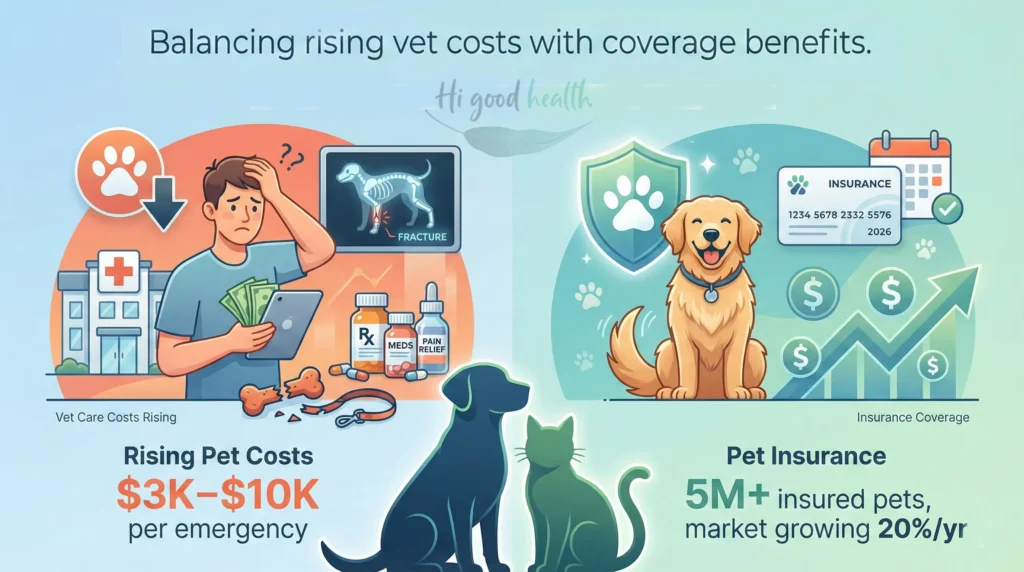
A single emergency — a swallowed toy, a broken bone, or cancer treatment — can cost $3,000 to $10,000. For many families, this is an unbearable financial shock.
Enter pet insurance. In 2026, more than 5 million pets in the US are insured, with the market growing at nearly 20% annually【NAPHIA. But is pet insurance a smart investment — or just another monthly bill?
How Pet Insurance Works in the US
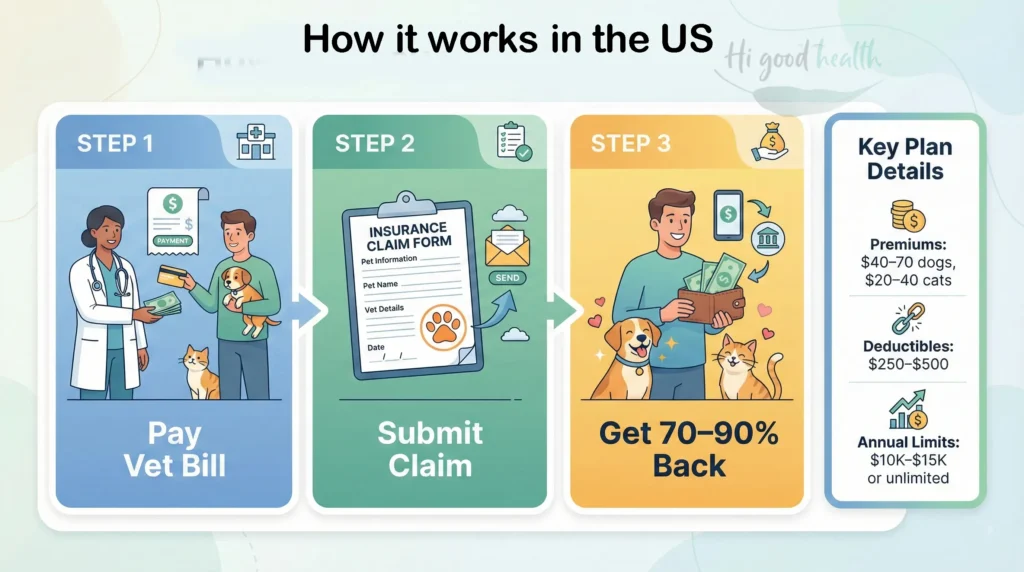
Unlike human health insurance, pet insurance typically follows a reimbursement model:
- Step 1: You pay the vet bill upfront.
- Step 2: File a claim with your insurer.
- Step 3: Receive reimbursement (usually 70–90%).
Key Components
- Premiums: Monthly payments, usually $40–70 for dogs, $20–40 for cats.
- Deductibles: $250–$500 per year or per incident.
- Reimbursement rate: 70–90%.
- Annual limits: Some plans cap payouts at $10,000–$15,000; others are unlimited.
What’s Covered (and What’s Not)
Usually Covered
- Accidents and injuries.
- Surgeries and hospitalizations.
- Diagnostic tests (X-rays, MRIs, bloodwork).
- Prescription medications.
- Chronic conditions, if covered before diagnosis.
Usually Not Covered
- Pre-existing conditions.
- Preventive care (vaccines, flea/tick prevention, dental cleanings).
- Elective procedures.
- Exotic pets (birds, reptiles, rabbits).
💡 Some providers (like Nationwide) offer add-ons for wellness care and even exotic pets.
The Cost of Vet Care in 2026
- Dog emergency surgery (ACL tear): $4,000–$7,000.
- Cancer treatment: $5,000–$12,000.
- Hospitalization for pancreatitis: $2,500–$5,000.
- Routine dental cleaning: $400–$800 (usually not covered).
Without insurance, many families face “economic euthanasia” — the heartbreaking choice to euthanize a pet they cannot afford to treat.
To truly understand the hidden costs of pet obesity, check our detailed blog
Case Studies: Real US Pet Owners
Case 1: Bailey the Golden Retriever (Denver, CO)
Bailey tore her ACL while playing fetch. Surgery cost $6,500. Her owners paid $55/month in premiums and were reimbursed $5,200 after deductible. Insurance made the difference between financial stress and life-saving surgery.
Case 2: Max the Cat (Chicago, IL)
Max developed urinary blockages, requiring multiple ER visits totaling $4,200. Without insurance, his retired owner would have faced credit card debt. Insurance reimbursed 80%, making long-term management possible.
Case 3: Luna the French Bulldog (New York, NY)
Frenchies are prone to breathing issues. Luna’s surgery cost $8,000. Insurance covered 70%, but premiums had risen to $90/month due to her breed’s risk. Luna’s owner realized insurance was essential for high-risk breeds.
Pet Insurance vs Alternatives
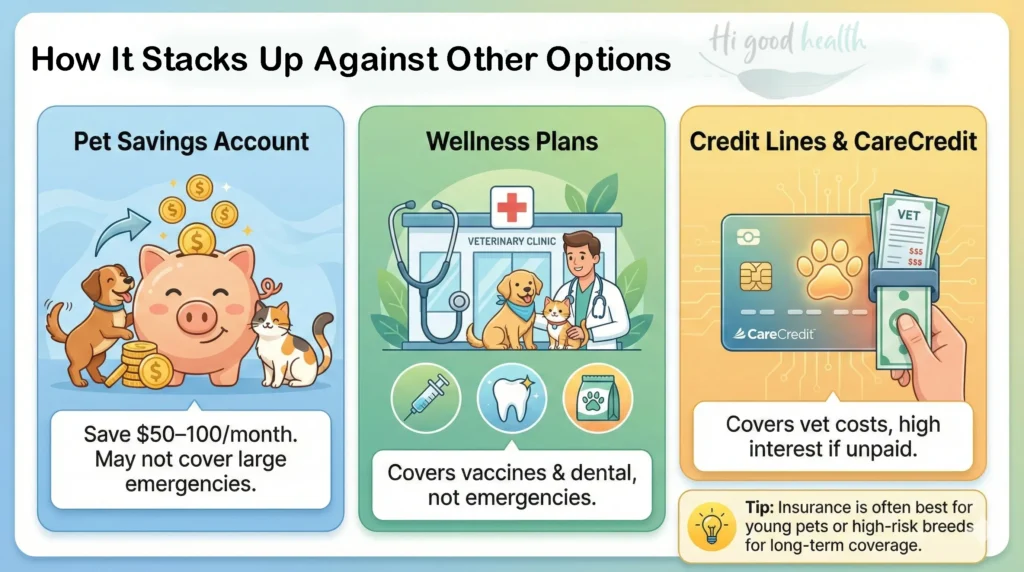
1. Pet Savings Account
Set aside $50–100/month in a dedicated account. Works if your pet stays healthy, but a $7,000 emergency in year two could drain savings.
2. Wellness Plans
Offered by Banfield (PetSmart), VCA, and other vet chains. Cover preventive care (vaccines, dental cleanings) but not emergencies.
3. Credit Lines & CareCredit
Veterinary-specific credit cards with high interest rates if unpaid quickly.
💡 Insurance is often most valuable for young pets or high-risk breeds, where long-term costs are likely.
Industry Trends in 2026
- Growth: NAPHIA reports 20% annual growth in insured pets.
- Tech integration: Apps allow instant claims and reimbursements.
- Customization: More policies tailored by breed, lifestyle, and region.
Controversy: Rising premiums for popular breeds (bulldogs, retrievers).
Short- vs Long-Term Considerations
Short-Term Benefits
- Peace of mind during emergencies.
- Avoiding high-interest debt.
- Encouraging proactive vet visits.
Long-Term Considerations
- If your pet stays healthy, premiums may outweigh payouts.
- But most pets develop chronic issues by age 8–10, when coverage pays off.
Step-by-Step: Deciding If Insurance Is Right for You
- Assess Breed Risk
- Bulldogs, retrievers, Siamese cats = higher health risks.
- Evaluate Finances
- Can you cover a $5,000 bill tomorrow? If not, insurance is worth exploring.
- Compare Providers
- Trupanion: No payout caps, higher premiums.
- Healthy Paws: Strong accident coverage.
- Nationwide: Exotic pet coverage.
- Review Fine Print
- Exclusions matter more than coverage lists.
- Some policies exclude hereditary conditions.
To learn more about tick-borne diseases threatening pets in 2026, read our in-depth blog
FAQS
1. Is pet insurance worth the cost?
It prevents “economic euthanasia” when facing emergency bills of $3,000–$10,000. While it may not save money if your pet stays healthy, it ensures you never have to choose between your wallet and your pet’s life.
2. Does pet insurance cover pre-existing conditions?
No, conditions diagnosed before coverage starts are excluded. However, if you insure your pet before issues arise, chronic conditions are typically covered for life, making early enrollment crucial.
3. How does the reimbursement model work?
Unlike human insurance, you pay the vet upfront, file a claim, and get reimbursed 70–90%. Some modern apps now allow for instant claims, but standard processing typically takes about 1–2 weeks.
4. Are routine dental cleanings and vaccines covered?
Standard accident and illness plans usually exclude preventive care like vaccines and dental cleanings, which can cost $400–$800. You generally need a separate “wellness” add-on to cover these routine expenses.
5. Can I get insurance for an older pet?
Yes, but expect higher premiums and exclusions for pre-existing issues. Coverage is often best purchased for young pets, as many develop chronic conditions by age 8–10 that would be covered if insured early.
6. Is insurance necessary for indoor cats?
Yes. Indoor cats still face costly emergencies like urinary blockages ($4,200+) or cancer. Insurance protects against these sudden, high-cost medical events even if the cat never goes outside.
7. Can I keep my current veterinarian?
Yes. Because you pay upfront and are reimbursed later, you can use any licensed veterinarian in the U.S., including specialists and emergency hospitals, without worrying about “in-network” restrictions.
8. Will my premiums go up over time?
Likely, yes. Inflation and your pet’s aging typically drive costs up. High-risk breeds, like Bulldogs or Retrievers, may see steeper increases as they grow older and become prone to breed-specific health issues.
Final Thoughts
For American pet parents in 2026, the decision about pet insurance is both financial and emotional. It won’t always “save money,” but it ensures you never have to choose between your wallet and your pet’s life.
If your pet is young, your breed is high-risk, or your savings are limited, insurance can be one of the smartest investments you make. For others, a disciplined savings plan may suffice. Either way, understanding the costs and risks arms you to protect your furry family member.
Glossary
- Deductible: The amount paid out-of-pocket before insurance applies.
- Reimbursement Rate: Percentage of vet bill insurance pays (typically 70–90%).
- Pre-existing Condition: Health issue diagnosed before coverage.
- Wellness Plan: Preventive care coverage (vaccines, dental) separate from insurance.
- Economic Euthanasia: When owners euthanize pets due to financial constraints.
References
- NAPHIA — Industry Data
- APPA — Pet Industry Statistics
- AVMA — Pet Insurance Guidance
- Consumer Reports — Pet Insurance Analysis

