
Introduction: A Growing Threat to Pets in America
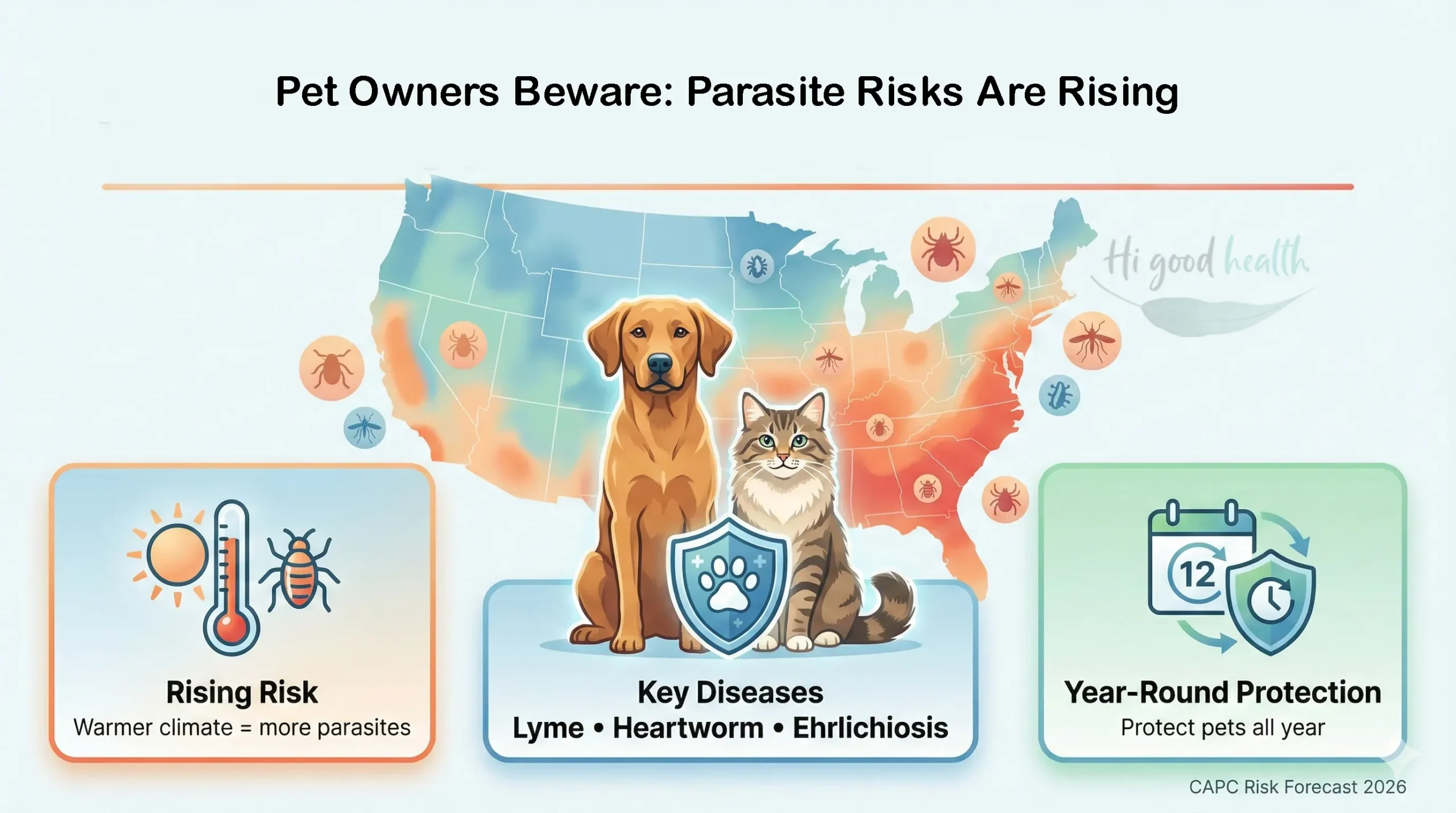
Climate change, suburban sprawl, and warmer winters are fueling an explosion in ticks and parasites across the United States. According to the Companion Animal Parasite Council (CAPC), 2026 will bring higher-than-average risk for Lyme disease, ehrlichiosis, and heartworm in many regions.
For American pet owners, this means year-round vigilance, not just “summer flea season.” Let’s break down the 2026 forecasts, the diseases to watch, and what you can do to protect your furry family members.
The Top Tick & Parasite Threats in 2026
1. Lyme Disease (Borrelia burgdorferi)
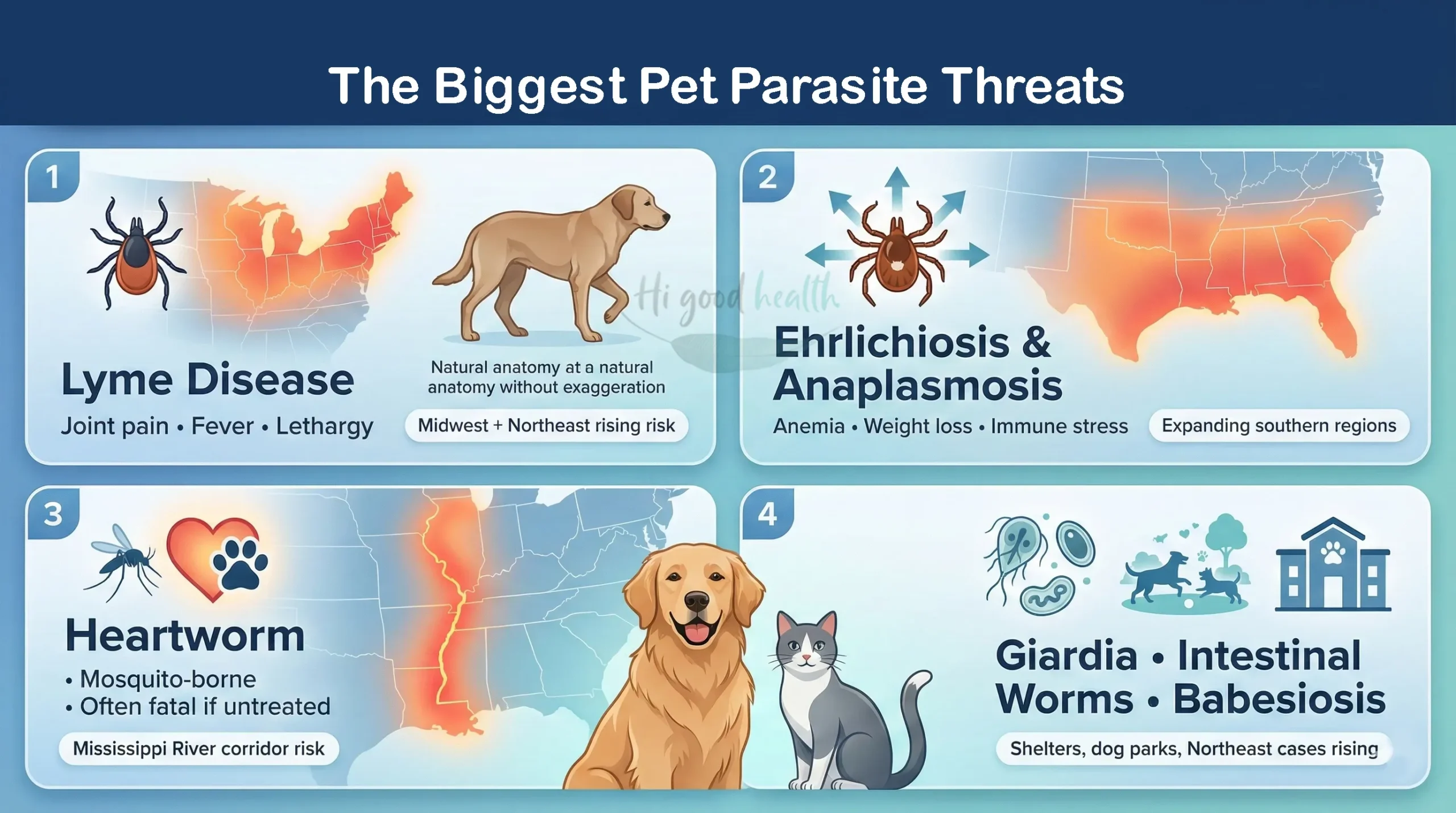
- Rising in the Midwest & Northeast: CAPC maps show elevated tick prevalence in Wisconsin, Minnesota, Pennsylvania, and New York.
- Symptoms in dogs: lameness, joint pain, fever, lethargy.
- Note: Cats are rarely symptomatic but can carry ticks indoors.
2. Ehrlichiosis & Anaplasmosis
- Spread by the Lone Star tick and black-legged tick.
- Expanding range in the Southeast, Texas, and Oklahoma.
- Can cause chronic infections with anemia, weight loss, and immune suppression.
3. Heartworm (Dirofilaria immitis)
- Transmitted by mosquitoes.
- 2026 forecast shows above-average prevalence in the Mississippi River Valley, stretching from Louisiana to Illinois.
- Untreated heartworm disease is often fatal in dogs.
4. Other Parasites
- Giardia & intestinal worms remain common in shelter pets and dog parks.
- Babesiosis, once rare in the US, is now being diagnosed in Northeastern states.
Why the Risk Is Increasing
- Climate Change: Warmer winters allow ticks to stay active longer.
- Urban Sprawl: Deer and rodents bring ticks into suburban yards.
- Travel & Relocation: Americans moving pets across states spread parasite ranges.
- Resistant Parasites: Some tick species show resistance to older preventives.
Real-Life Case: Max from North Carolina
Max, a 5-year-old Labrador, loved hiking with his family near Asheville. Despite occasional flea treatments, he developed a persistent fever and lameness. Tests confirmed Lyme disease. After 6 weeks of antibiotics, Max recovered — but his family now keeps him on year-round prevention and regular tick checks.
Short- vs Long-Term Impact on Pets
Short-Term:
- Fever, joint pain, skin irritation
- Digestive upset from parasites
Long-Term:
- Chronic arthritis (Lyme disease)
- Heart and lung damage (heartworm)
- Fatal anemia (severe ehrlichiosis or babesiosis)
Step-by-Step: Protecting Your Pet in 2026
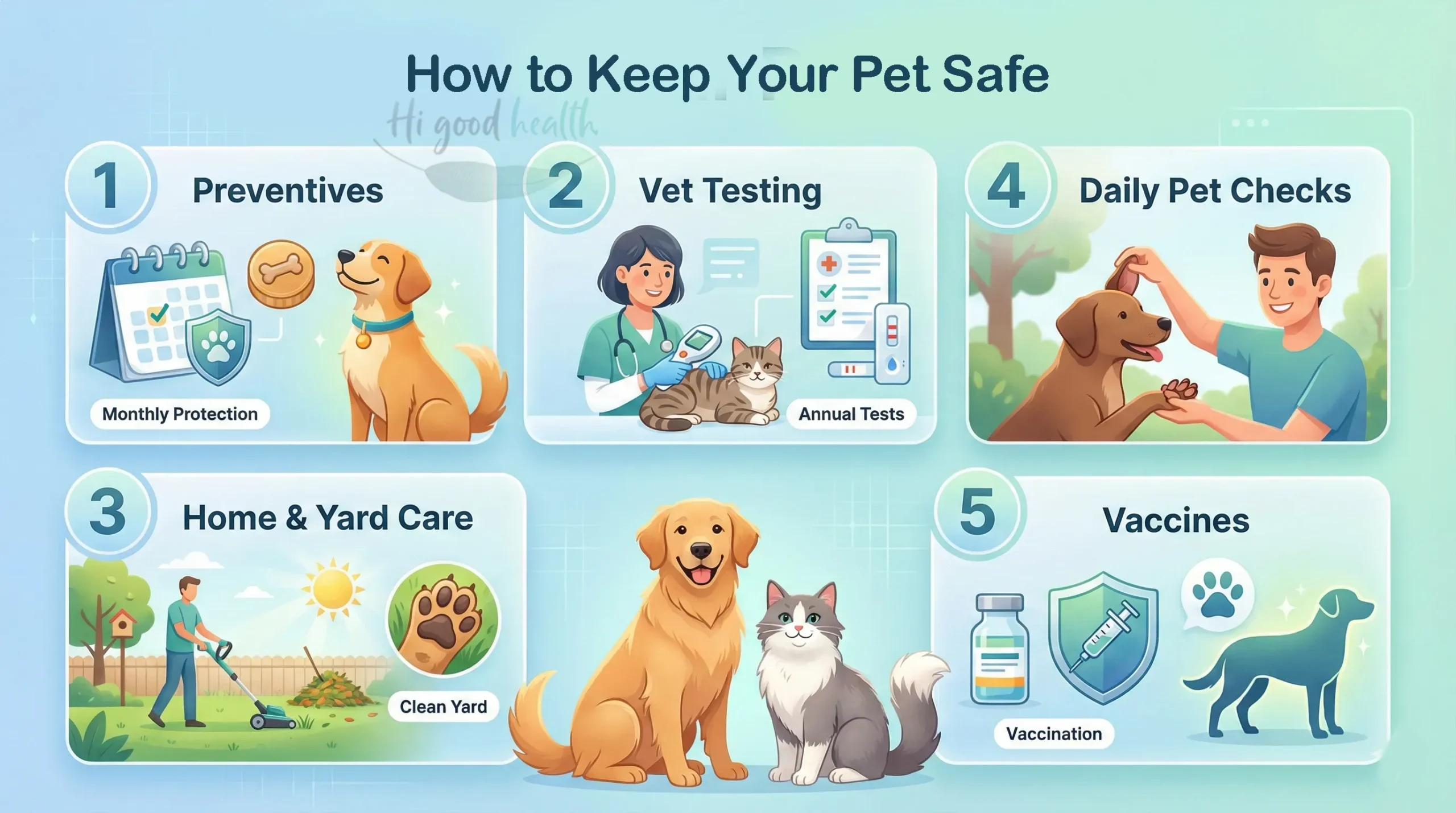
- Year-Round Preventives
- Monthly chewables (Simparica Trio, NexGard, Bravecto).
- Heartworm prevention (Heartgard, Sentinel).
- Regular Vet Testing
- Annual heartworm tests.
- 4Dx SNAP test (Lyme, ehrlichia, anaplasma, heartworm).
- Home & Yard Care
- Keep grass short, remove leaf litter.
- Consider tick-control treatments in high-risk states.
- Daily Pet Checks
- Run fingers through fur after outdoor play.
- Focus on ears, belly, between toes.
- Vaccines
- Lyme disease vaccine available for dogs in high-risk states. Ask your vet.
Regional Outlook (2026 CAPC Forecast Highlights)
- Northeast (NY, PA, NJ): Highest Lyme risk.
- Midwest (WI, MN, IL): Expanding tick season into spring and fall.
- South (TX, OK, AR): High ehrlichia and anaplasma risk.
- Mississippi River Valley: Elevated heartworm cases.
- West Coast (CA, OR, WA): Lower risk but increasing tick movement inland.
What the Experts Say
- CAPC 2026 Forecast: “Parasite risk is no longer seasonal; it’s year-round in much of the US.”
- AVMA: Recommends consistent parasite prevention, even in urban pets.
- CDC: Reports steady increases in tick-borne illnesses in both humans and pets.
If you prefer a more visual version, check out our YouTube video here:
FAQs
Q1: Do indoor cats need parasite prevention?
Yes. Ticks and fleas can hitchhike indoors on shoes, dogs, or clothing.
Q2: Are natural flea collars effective?
Most lack proven efficacy. Stick to vet-recommended products.
Q3: Can people catch these diseases from pets?
Not directly, but ticks that bite pets can also bite humans.
Final Thoughts
In 2026, no American pet is completely safe from parasites — not even indoor cats or suburban dogs. But prevention is far easier (and cheaper) than treatment. By staying consistent with year-round preventives and following CAPC forecasts, you can protect your furry friend from tick-borne threats.
Glossary
- CAPC: Companion Animal Parasite Council.
- Lyme Disease: Tick-borne illness caused by Borrelia burgdorferi bacteria.
- Heartworm: Parasitic worm transmitted by mosquitoes, infects the heart and lungs.
- Ehrlichiosis: Tick-borne bacterial infection affecting white blood cells.
