
Introduction: More Than Just a “Chubby Pet”
Have you ever smiled at a pudgy dog or cat and thought, “Oh, how cute!”? You’re not alone. In fact, many U.S. pet owners associate extra weight with extra love. But here’s the truth: behind those round bellies lie serious health risks, unexpected vet bills, and even shifts in your pet’s mood and behavior. Pet obesity isn’t just a cosmetic issue — it impacts your pet’s happiness and your family’s well-being, often in ways we don’t immediately see.
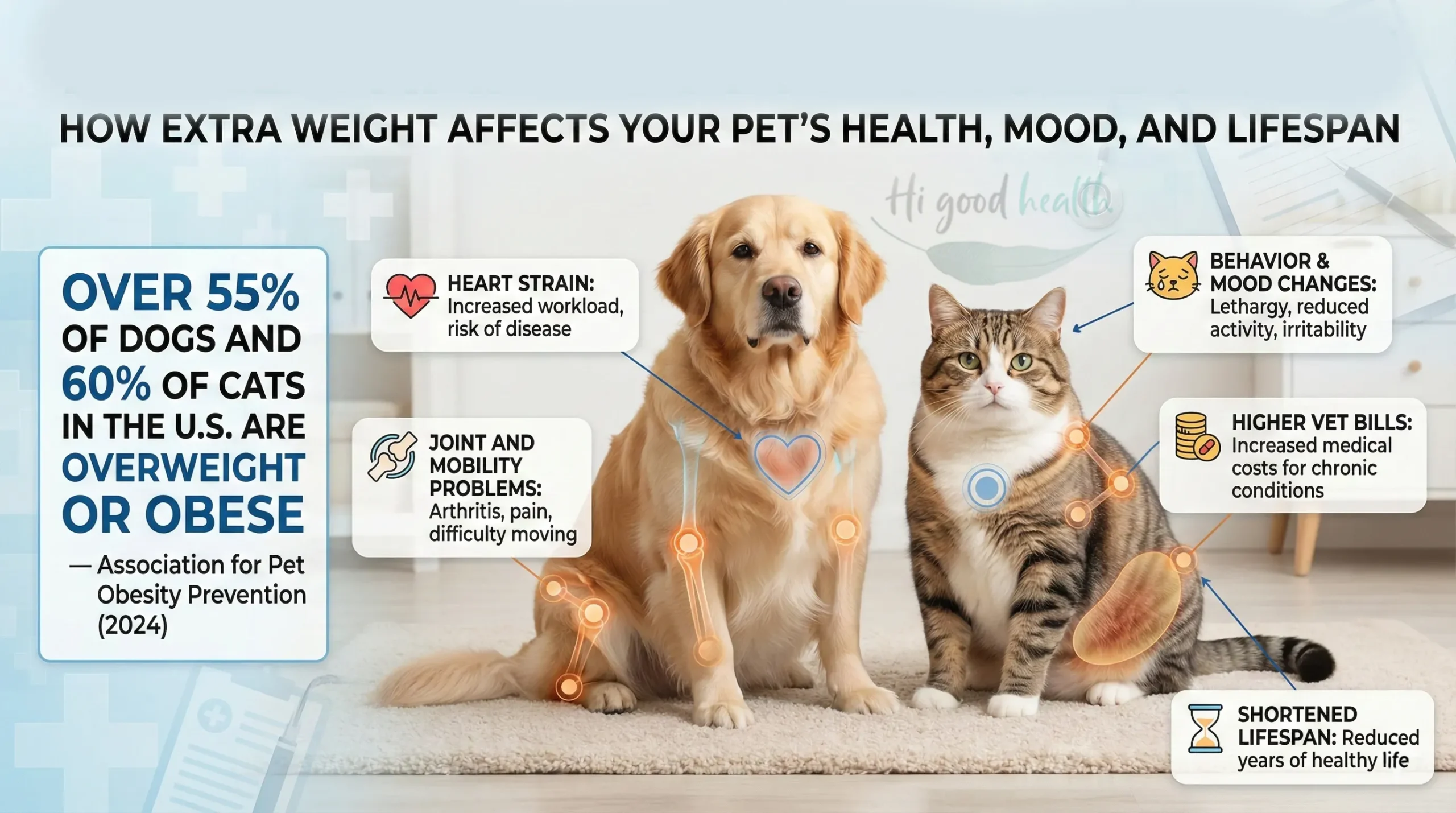
Today, more than 55% of dogs and 60% of cats in the U.S. are overweight or obese (Association for Pet Obesity Prevention, 2024). That’s more than half of our furry companions at risk. The hidden costs — medical, financial, and emotional — are staggering, yet preventable.
The Financial Weight of Pet Obesity
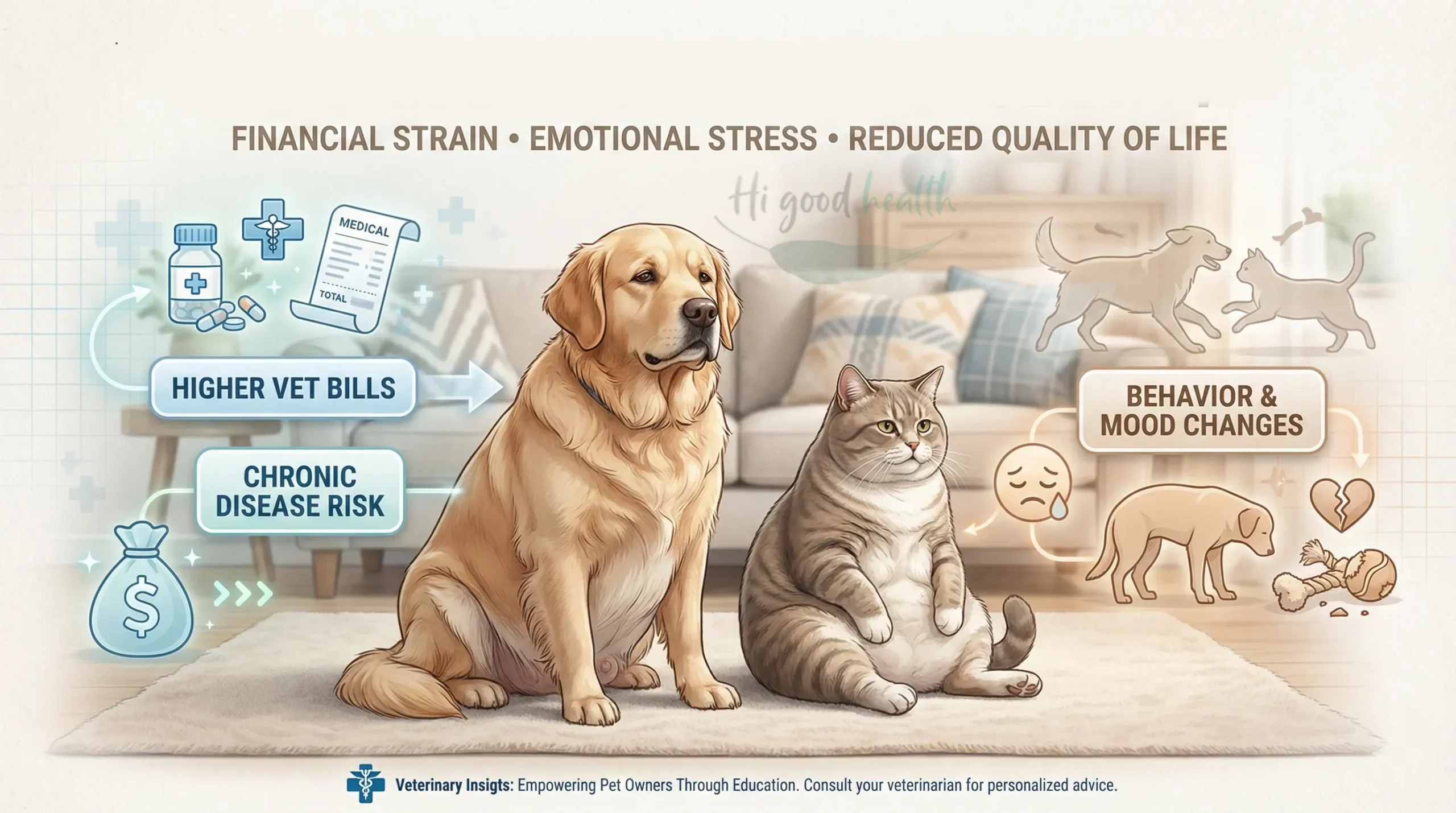
Obesity shortens lifespans and leads to diseases like arthritis, diabetes, and heart problems. Each of these conditions comes with vet bills that can quietly drain a family budget.
- Diabetes treatment for cats: $240–$1,200 annually (not counting emergencies).
- Arthritis management in dogs: Ongoing medications, therapy, or even surgery costing thousands.
- Obesity-related emergency care: Unexpected bills ranging from $800 to $3,000 per episode.
Emotional & Behavioral Costs: The Hidden Happiness Factor
Here’s something many owners don’t realize: obesity doesn’t just slow your pet physically — it impacts their brain chemistry. Studies show that pets who maintain healthy activity levels experience better dopamine regulation. In simple terms:
- Active pets = more dopamine = happier, calmer, less aggressive.
- Overweight pets = reduced activity = lower dopamine = frustration, irritability, and boredom.
This doesn’t just affect your pet. A stressed or unhappy dog is more likely to bark excessively, show aggression, or develop destructive habits — behaviors that ripple into family stress. By contrast, lean and active pets bring more joy, playfulness, and bonding moments to the entire household.
“When pets lose weight and return to healthy activity, owners often notice their personality shining through again,” notes Dr. Ernie Ward, founder of the Association for Pet Obesity Prevention.
Root Causes of Pet Obesity in America
- Free-feeding & over-treating – Leaving bowls full all day or using too many calorie-dense treats.
- Sedentary lifestyle – Indoor pets often lack daily structured exercise.
- Misconceptions about “healthy” food – Some marketed “premium” foods are calorie bombs.
- Owner awareness gap – Many pet parents don’t realize their pet is overweight until the vet points it out.
Practical Solutions for Healthier, Happier Pets
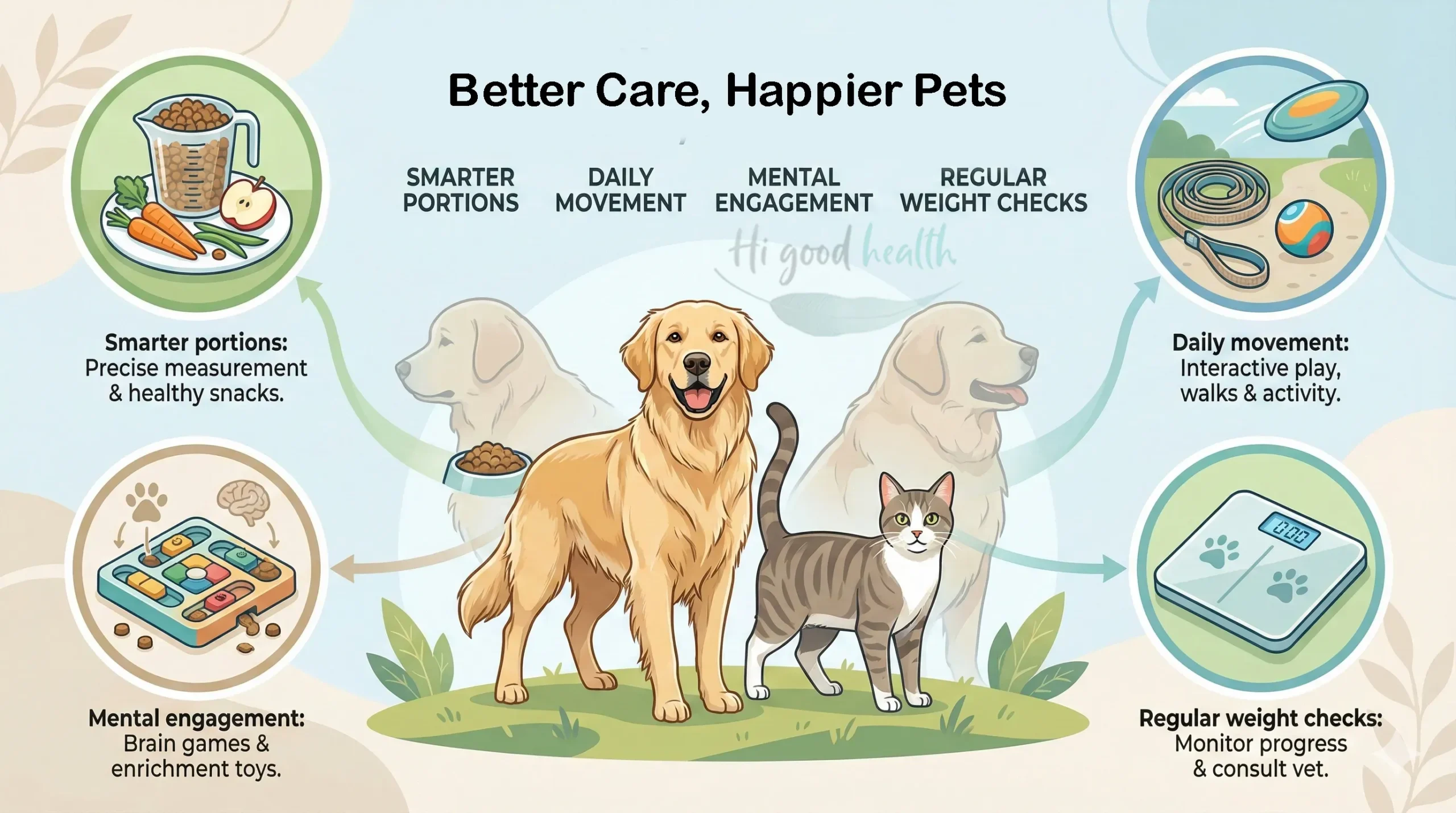
1. Portion Control & Smarter Treats
- Use measuring cups instead of guessing portions.
- Swap calorie-heavy treats for carrot sticks, apple slices, or pumpkin cubes (vet-approved, plant-based, low-calorie options).
2. Daily Exercise Routines
- Dogs: Aim for 2 brisk walks + short play sessions daily.
- Cats: Stimulate with laser toys, feather wands, or climbing trees.
3. Engage Their Minds
Obesity is often linked to boredom. Puzzle feeders, snuffle mats, and training games keep pets mentally sharp and satisfied.
4. Regular Weight Monitoring
Weigh monthly at home or during vet visits. Small adjustments early prevent costly medical issues later.
For tips on family-friendly exercise routines with pets, check out our fitness with pets guide.
Playtime & Engagement: The 30-Minute Happiness Rule
One of the simplest, most effective ways to fight pet obesity is just 30 minutes of active playtime daily. This doesn’t have to be complicated:
- Backyard games: Fetch, tug-of-war, or agility setups using simple obstacles.
- Indoor fun: Chase toys for cats or hide-and-seek with treats for dogs.
- Family bonding: If you’re busy, encourage your spouse or kids to join in. Pets love routine, and shared activity strengthens the pet–family bond.
These daily play sessions burn calories, boost dopamine levels, and prevent boredom-driven behaviors like chewing furniture or excessive barking. Over time, you’ll notice your pet not only losing weight but also becoming more affectionate, calmer, and happier.
What Science Says: Latest Research on Pet Obesity
- A 2023 study from Banfield Pet Hospital found overweight pets live up to 2.5 years less than their lean counterparts.
- Research in the Journal of Veterinary Behavior links obesity to increased anxiety and aggression in dogs.
- Advances in pet nutrition science now emphasize high-fiber, plant-based diets to increase satiety without excess calories (Tufts Cummings School of Veterinary Medicine).
These findings confirm what vets have long observed: obesity silently erodes not only health but also the bond between pets and their families.
Real-Life Story: From Couch Potato to Playful Pup
Max, a 7-year-old Labrador from Ohio, weighed 105 pounds and struggled with arthritis. After his family followed a vet-recommended weight plan — portioned meals, daily walks, and veggie snacks — Max lost 18 pounds in a year. Today, he plays fetch with his kids again, barks less at night, and is more affectionate. His owner says, “It’s like we got our happy dog back.”
If you prefer a more visual version, check out our YouTube video here:
FAQs on Pet Obesity
Q1: How do I know if my pet is overweight?
Check if you can feel (but not see) their ribs. A visible waistline is a good sign. Use body condition charts from trusted vet sources.
Q2: Are certain breeds more prone to obesity?
Yes. Breeds like Beagles, Dachshunds, and Labradors are genetically predisposed.
Q3: Can indoor cats stay fit without going outside?
Yes! Indoor play with climbing trees, toys, and short daily sessions works wonders.
Q4: Do pet insurance plans cover obesity-related illnesses?
Some do, but most consider obesity preventable. Prevention saves more money than insurance claims.
Q5: What’s the easiest first step I can take today?
Switch to measured meals and add 15 minutes of interactive play or a walk.
Glossary
- Dopamine: A brain chemical linked to happiness, motivation, and behavior.
- Free-feeding: Leaving food out all day instead of scheduled meals.
- Satiety: The feeling of fullness after eating.
References & Resources
- Association for Pet Obesity Prevention
- Tufts Cummings Veterinary Nutrition
- Banfield Pet Hospital Report 2023
- Journal of Veterinary Behavior
Conclusion & Call-to-Action
Pet obesity is more than a health issue — it’s a quality-of-life issue. By making small, intentional changes, you not only save money but also give your pet a longer, happier, and more playful life. And when pets are happier, so are we.
👉 Explore more guides on higoodhealth, where we share clean, credible, and simple health insights to help families (and pets!) thrive.
💬 Share your pet’s weight journey in the comments — your story could inspire another family to take action today.
