
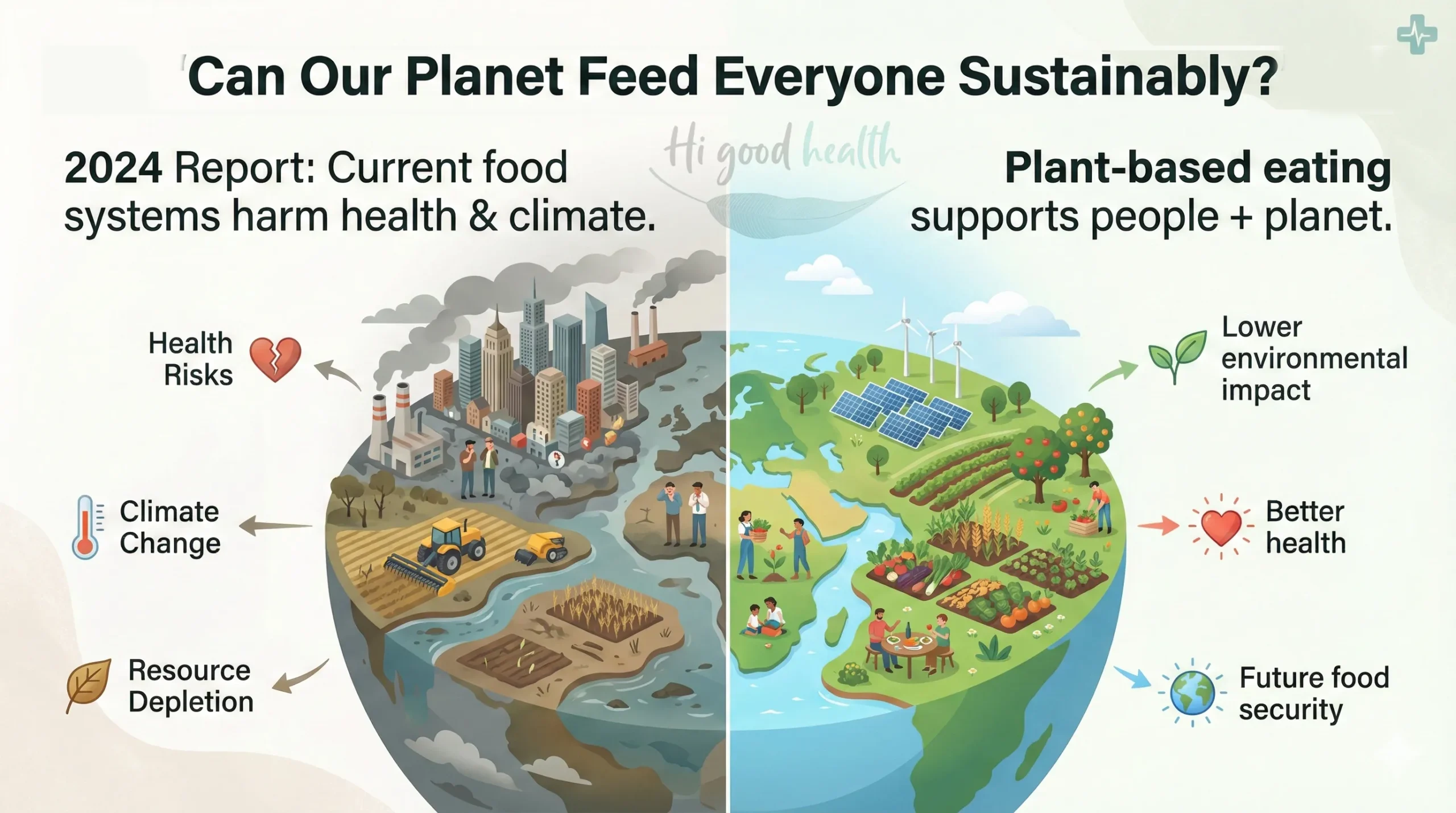
As a matter of fact, the big question today is whether our planet can really handle more and more people eating the way we do now. With more people needing food every day, a 2024 report from the Food System Economics Commission warned us that our current food systems are hurting our health, the planet, and even making climate change worse.
That brings us to an important point, could eating more plant-based food help feed everyone in a better, safer way? All signs point to yes. In fact, it might be the smartest and most doable option we have right now
Can a Plant-Based Diet Provide All Necessary Nutrients for Everyone?
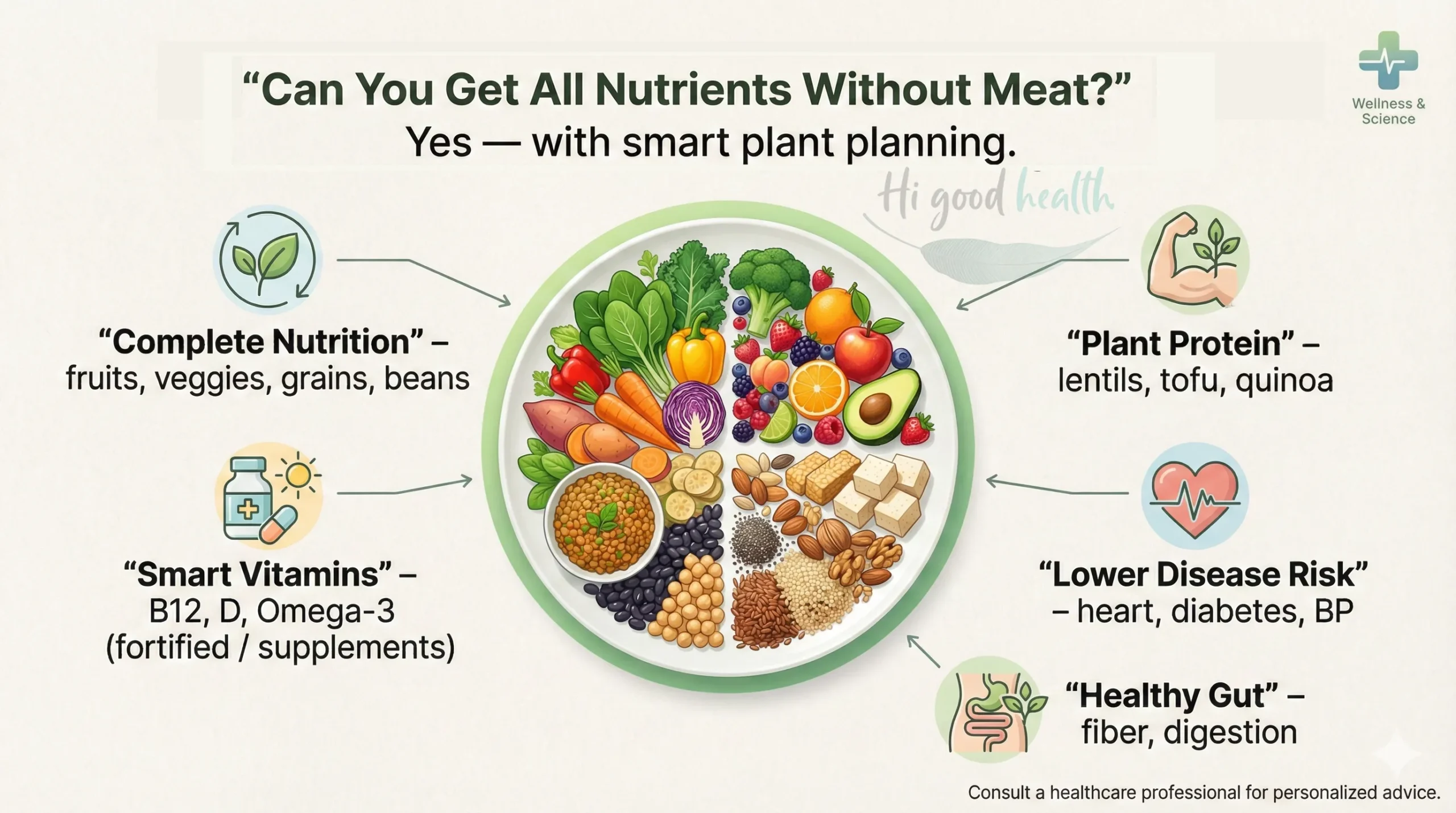
One big worry people have is whether you can get all the nutrients you need without eating meat or fish. But science keeps showing that if you plan it right, vegetarian and vegan diets can work well for people of all ages.
- Simple Nutrition: Eating lots of fruits, veggies, grains, beans, nuts, and seeds gives your body the vitamins, minerals, fiber, and other good stuff it needs.
- Plenty of Protein: Foods like lentils, beans, tofu, quinoa, and nuts have enough protein to keep you strong and healthy every day.
- What About Vitamins: Some things like Vitamin B12, Vitamin D, and omega-3 might be a little tricky to get from plants. But you can still get them with fortified foods or simple supplements if needed.
- Lower Risk of Diseases: People who eat mostly plant foods often have a lower risk of things like diabetes, heart problems, some cancers, and high blood pressure.
- Happy Gut: Plant foods have lots of fiber, which helps your stomach work better and keeps your gut healthy—really important for feeling good overall.

Is There Enough Land to Feed Everyone on a Plant-Based Diet?
Effective land use is a central issue in global food security. Modern agriculture, most of which is animal agriculture, is incredibly wasteful in terms of percentage of resources that actually result in food for human consumption.
- Massive land savings: If everyone went plant-based, agriculture would occupy only a fraction of our current land use, potentially slashing global land use by 75% and freeing huge amounts of land for reforestation, biodiversity and other sustainable uses. This is because far more space is needed to produce protein from meat, and especially from beef, than from cereals or legumes.
- Inefficient Conversion: Livestock agriculture requires a large amount of land for grazing and to grow feed crops like soy and corn, both of which could be fed directly to humans.
- Deforestation: Animal agriculture, especially cattle ranching, is one of the leading causes of deforestation in the world, particularly in places like the Amazon. Switching to a plant-based diet can stave off much of this environmental destruction.
- Resource Utilisation: When people only eat plants, the food supply is not wasted at such a high rate like when plants are fed to animals to produce meat making the system much efficient.
- Feeding More People: Studies show that the world’s food system could feed more of us — up to 10 billion of us (the population by 2050) at our current rates of production, if all the food we grew was diverted from animals fed to people and if we sharply cut other waste.
What is the Environmental Impact of Shifting to a Plant-Based Food System?
Sadly, the way we eat — particularly when it comes to meat — has an enormous effect on the planet. Animal raising is one of many serious environmental problems. Actually, going to a plant-based diet can fix a lot of that.
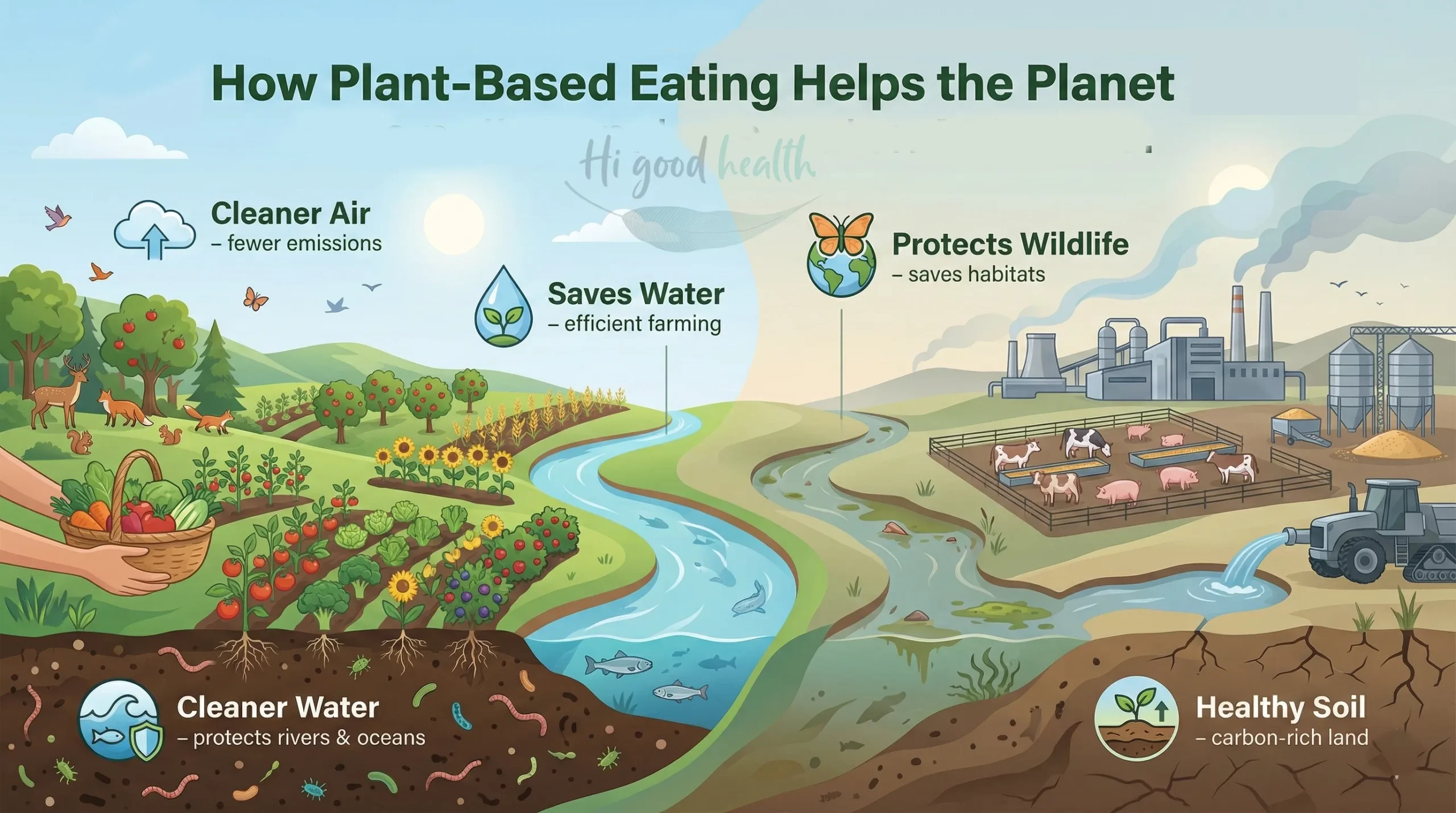
- Fewer pollutants in the air: When we raise animals, they make a lot of gases that are bad for everyone, like methane from cows and gases from animal poop. One study in France found that vegetarianism creates nearly 50% less pollution than a meat-focused lifestyle.
- Saves Water: When we have to water the food we grow for animals and water the animals itself, it uses a lot of clean water. But cultivating Fruits, veggies, and grains uses way less.
- Cleaner Rivers and Oceans: Animal farms can leach waste and chemicals into rivers and oceans, and fish and plants die as a result. Growing plants is notoriously easier on the water.
- Aids Wildlife: We tear down their homes and render land uninhabitable for wild animals just so that we can make room for animals we eat. The more plant-based foods we eat, the more land we can save and the more animals we can protect.
- Healthier Soil: Grow plants properly and your soil will be nutrient rich and utterly healthy. It is also a carbon sink and prevents the soil from washing away.
Can a Plant-Based System Address Global Food Security Challenges?
Substantially, food security is not just about growing enough food—it’s also about making sure people can get it and that it’s shared fairly. A plant-based way of eating can help solve a lot of these problems.
- Stronger Food Systems: Relying on different kinds of plant-based proteins can make our food supply more stable. It helps protect us from things like extreme weather, diseases, and price spikes.
- New Jobs and Ideas: The plant-based food world is growing fast. It’s opening doors for new jobs, better farming methods, and cool inventions like plant-based meats and indoor farming.
- Uses Less to Make More: Plant-based farming needs less land, water, and energy. That means we can grow more food even in places that do not have a lot of natural resources.
- Fighting Hunger: Even though we grow enough food globally, many people still go hungry. A fairer, plant-focused system could help fix that by using resources smarter and making food more available to everyone.
Key Takeaways: A Call to a Plant-Powered Future
The dream of a more sustainable and fair food system doesn’t exist in the abstract; it’s an urgent need. The weight of evidence overwhelmingly supports a future in which we can not only exist, but really prosper as a species, on a diet that is largely, if not entirely, devoid of meat and fish. We have the understanding, the capabilities, and the increasing technology to make that transition happen.
The question is, “Can we live on this planet without meat and fish?”. but “How fast can we lock arms around the rich promise of a plant-powered future for everyone’s benefit?” By selecting plant-based, we are all personally and collectively part of a better world and a better future. The potential to form that future rests in our shared dietary decisions.
If you prefer a more visual version, check out our YouTube video here
Frequently Asked Questions (FAQ)
1. Can we really feed the entire world without meat and fish? Yes, research indicates that our current food system could feed up to 10 billion people if we shifted away from animal agriculture. Growing crops directly for humans is far more efficient than feeding them to animals, which reduces waste and maximizes our food supply.
2. Is it difficult to get enough protein on a plant-based diet? Not at all. You can get plenty of protein from common foods like lentils, beans, tofu, quinoa, and nuts. Science consistently shows that well-planned vegetarian and vegan diets can provide all necessary nutrients for people of all ages.
3. What vitamins might I miss if I stop eating meat? While plants provide most nutrients, getting enough Vitamin B12, Vitamin D, and omega-3s can sometimes be tricky. However, you can easily maintain healthy levels of these nutrients by consuming fortified foods or taking simple supplements.
4. How does eating plants help the environment? The impact is massive. Shifting to a plant-based diet could reduce global agricultural land use by 75%, freeing up space for forests and biodiversity. It also saves significant amounts of water, reduces air pollution, and helps prevent deforestation in critical areas like the Amazon.
5. Will a plant-based diet improve my health? Likely, yes. People who eat mostly plants often have a lower risk of serious conditions like heart disease, diabetes, high blood pressure, and certain cancers. Additionally, the high fiber content in plants supports a healthy gut and better digestion.
6. Does animal farming really use that much land? Yes, it is incredibly land-intensive. Livestock agriculture requires vast areas for grazing and growing feed crops like soy and corn. In fact, producing protein from meat—especially beef—requires far more space than producing the same amount of protein from cereals or legumes.
References:
- Food System Economics Commission (2024). Report on the urgent need for a transformation of current food systems.
- Berners-Lee, M. et al. (2018). Current global food production is sufficient to provide enough food for the projected global population of 9.7 billion in 2050 with a vegan (but not vegetarian) diet. Environmental Research Letters. https://consensus.app/home/blog/would-it-be-possible-to-feed-the-world-if-everyone-was-vegetarian/
- The Good Food Institute (2023). Plant-based meat manufacturing capacity and pathways for expansion. https://gfi.org/resource/plant-based-meat-manufacturing-capacity-and-pathways-for-expansion/
- MDPI (2024). Reducing Agricultural Land Use Through Plant-Based Diets: A Case Study of Romania. https://www.mdpi.com/2072-6643/17/1/175
- Everyday Health (2023). 9 Scientific Benefits of Following a Plant-Based Diet. https://www.everydayhealth.com/diet-nutrition/scientific-benefits-following-plant-based-diet/
